Koran: Thank you for your excellent work in reading and thinking about the Koran this week. I hope you have learned some valuable perspectives. Please blog about what you, as a Christian, learned this week. I would especially like to hear if you have picked up on any concrete reasons why you find Christianity to be more reliable or appealing.
Essay: All of you who conferenced with me this past week owe me a final critical essay draft next Thursday, before the long "snow day" weekend. Those of you who will conference next week have until the following Monday, after the long weekend.
Friday, February 27, 2009

Thursday, January 29, 2009
Camelot Assignment

Thank you for enduring this old-fashioned musical, actually my favorite movie of all time, Camelot. Your job is to look past the campy songs and 60's sensibility to see the depth of the human drama. Watch the actors' faces. The performances are emotionally RICH.
This movie is based on a 1950's novel, which in turn was based on a medieval book by Sir Thomas Mallory. It was, perhaps, the first real novel written in English. Indeed, the legends of King Arthur are some of the most enduring of Western culture. In class we will talk about how the legends got started and how they've changed over the years. Perhaps you have enjoyed retellings of the Arthurian legend in other films.
For your blog, please just comment on your reaction to Camelot. Talk about what you appreciated in the story and/or the performances. Talk about why the film has universal human appeal. Also, you might look for Christian significance -- what do you think the story has to say about human beings, sin, Jesus, salvation, hope, or forgiveness? Your response may be free-flowing, but it should be in reasonably good form (capitalization, etc.).
On Monday, we will likely finish up the movie and do a little creative response. I know how you love creative responses :)
Monday, January 12, 2009
Acts 17
 In our final bit of Hellenistic lit, we've looked at Acts 17. Please note the references to the Epicureans and Stoics as well as allusions to two Greek writers:
 1) Aratus, The Phaenomena, about the stars/astrology, in which he gives an opening invocation to Zeus, saying "for we are indeed his offspring."
2) Epimenides, Cretica, a poem in which the speaker addresses Zeus:
They fashioned a tomb for thee, O holy and high one—
The Cretans, always liars, evil beasts, idle bellies!
But thou art not dead: thou livest and abidest forever,
For in thee we live and move and have our being.
The Cretans, always liars, evil beasts, idle bellies!
But thou art not dead: thou livest and abidest forever,
For in thee we live and move and have our being.
One final concept to note in this passage -- Paul uses rational logic to make his point. Here's a summary of his argument, after the philosophers ask him to explain his strange stories about the resurrected Jesus:
1) We both worship a deity
(PROOF= your idols, temples, and altar to an unknown god)
2) My deity, unlike yours, does not live in a temple or need your petty sacrifices
3) My deity, like yours, determines our fates
4) My deity, like yours, created "offspring" and "lives and moves" in us
(PROOF= two Greek poets who worshiped Zeus)
5) Therefore, if Point #4 is true, then the real deity could not be a statue in a temple
6) Therefore, my concept of a deity is much stronger, and you should listen up because He is no longer putting up with nonsense and will one day come to judge us all
Wasn't Paul an amazing evangelist? He was well-read, logical, sympathetic, observant, and bold. I hope you will study and remember this passage!
January Book Club Details
Book Club Discussion Guide - Christian Fiction
1) What would you say is the purpose and audience of this book? Do you think the book succeeded?
2) What about the book seems universal or archetypal? In other words, what aspects of the book might be relevant to ANY audience, not just a Christian or Western one?
3) How does this book depict classical Western themes? Here are some we've studied in our Greek and Roman literary selections: fate/providence, rationalism/logic, idealism/realism, democracy/order, etc.
4) Western culture has been profoundly influenced by Christendom. What Christian influences, ideals, or reactions do you detect in the book?
4) Western culture has been profoundly influenced by Christendom. What Christian influences, ideals, or reactions do you detect in the book?
5) Consider your list of literary terms. Can you come up with a few literary observations relevant to the book? For instance, where was the climax of the story? Was there any use of symbol or motif? Last book club, everyone did climax and symbol -- this time, please branch out and use more terms! Consult your "popcorn" booklets.
6) What was the group's opinion of the book? Did you like it or not? Why? Defend your opinions.
For this Friday's book club forum, I will not talk as much as I did last time. All group members need to be prepared to do significant, meaningful talking about their book and the 6 questions. You are allowed to bring snacks to share with the class.
For this Friday's book club forum, I will not talk as much as I did last time. All group members need to be prepared to do significant, meaningful talking about their book and the 6 questions. You are allowed to bring snacks to share with the class.
Tuesday, January 06, 2009
Marcus Aurelius, Meditations, and Stoicism
 Please read the first book of Marcus Aurelius' Meditations.
In class, we will view an excerpt from Gladiator, in which Richard Harris portrays Aurelius. The movie's depiction of characters is roughly accurate, but the plot is a fabrication. Wikipedia has a page that explains the similarities and differences between the movie and actual historical record.
Extra credit for those bothering to read this post: Vote in the Stoic and Epicurean polls to the right and comment on this post so I know who voted. I am checking to see if you're making use of this site!!
Thursday, December 18, 2008
Snow Update!!
Well, I guess your prayers are answered -- no school and a postponed essay due-date! Here's what you need to be prepared for in January:
1) Please finish the analysis of John on your own. All four analysis sheets, COMPLETED on every line, legible and thoughtful, are due on your first day back. This means you will have to activate your brainsto make some good connections between John's style and his audience/purpose. See note on John below.
2) Take the extended essay deadline as an opportunity to perfect your editing: NO spelling errors, NO apostrophe errors, and NO run-ons. Also, make sure your analysis is ARTISTIC, drawing interpretations out of the text WITH LIT TERMS. Theological and personal musings are allowed, but the ARTISTIC ones are required.
NOTE REGARDING ANALYSIS OF JOHN: I had time to mention this to 6th period, but not 5th. The word "Word" in the first paragraph of this gospel is translated from the Greek Logos. Yes, you should know what that means. I also want you to connect this word to the beliefs of the Stoics, whom we've studied in class and whom you've probably studied for Coffey. Stoicism is rather pantheistic, and the Logos is the rational, orderly "divine" principle of the Stoic universe. What John is doing in the opening of his book is to address the Stoics, the most popular Hellenistic philosophers of the day, and tell them that the Logos is a PERSON. Carry this idea through your re-reading of the text and see how John addresses the Greek thinkers of his day. Also, the use of the word "Word" here does double duty in addressing the Jews, for they would associate the Creator with a Word. Thus, John's audience is Jews and Greeks.
1) Please finish the analysis of John on your own. All four analysis sheets, COMPLETED on every line, legible and thoughtful, are due on your first day back. This means you will have to activate your brainsto make some good connections between John's style and his audience/purpose. See note on John below.
2) Take the extended essay deadline as an opportunity to perfect your editing: NO spelling errors, NO apostrophe errors, and NO run-ons. Also, make sure your analysis is ARTISTIC, drawing interpretations out of the text WITH LIT TERMS. Theological and personal musings are allowed, but the ARTISTIC ones are required.
NOTE REGARDING ANALYSIS OF JOHN: I had time to mention this to 6th period, but not 5th. The word "Word" in the first paragraph of this gospel is translated from the Greek Logos. Yes, you should know what that means. I also want you to connect this word to the beliefs of the Stoics, whom we've studied in class and whom you've probably studied for Coffey. Stoicism is rather pantheistic, and the Logos is the rational, orderly "divine" principle of the Stoic universe. What John is doing in the opening of his book is to address the Stoics, the most popular Hellenistic philosophers of the day, and tell them that the Logos is a PERSON. Carry this idea through your re-reading of the text and see how John addresses the Greek thinkers of his day. Also, the use of the word "Word" here does double duty in addressing the Jews, for they would associate the Creator with a Word. Thus, John's audience is Jews and Greeks.
Monday, December 08, 2008
Intro to the Gospels

"Gospel" means "good news." Christianity is the only religion with gospels in its scripture. In class, we discussed the following five issues that may be raised when studying the gospels:
1) What is a gospel? How do I read it? Is it more like a biography or a myth?
2) Why are there only 4 gospels in the Bible? Why can't I read the Gospel of Thomas alongside Matthew, Mark, Luke and John?
3) Where did the gospel information come from? Did the synoptic writers just copy one another? Were they eyewitnesses? Were they second-hand reporters?
4) Is our current copy of the gospels accurate to the original manuscripts? How does manuscript evidence for the gospels stack up to other ancient texts? (lower criticism)
5) Is the gospel material authentic and inspired? What do the "higher critics" speculate? How might a Christian respond?
1) What is a gospel? How do I read it? Is it more like a biography or a myth?
2) Why are there only 4 gospels in the Bible? Why can't I read the Gospel of Thomas alongside Matthew, Mark, Luke and John?
3) Where did the gospel information come from? Did the synoptic writers just copy one another? Were they eyewitnesses? Were they second-hand reporters?
4) Is our current copy of the gospels accurate to the original manuscripts? How does manuscript evidence for the gospels stack up to other ancient texts? (lower criticism)
5) Is the gospel material authentic and inspired? What do the "higher critics" speculate? How might a Christian respond?
Friday, December 05, 2008
Three (and only three) Ways to Quote
1. The SAYS Type
Mrs. Kirk said, "You had better study your vocabulary words!"
Note the speaker, the speaker's verb, the speaker's breath (the comma), and the speaker's capitalized sentence.
2. The COLON Type
Mrs. Kirk gave our class some excellent advice: "Proofread and run spell check!"
You stand and make a complete statement and then throw your hands out in a big "ta-da." Your two hands are like the two dots of the colon. Then you present your quote.
3. The FLOWING Type
My teacher insisted that we do "slow reading with oral paraphrasing" in order to improve our comprehension.
Note how one quoted phrase has been inserted into my sentence, and if I remove the quotation marks, my sentence still looks normal.
Special Note: The SAYS type can be converted into a FLOWING type by inserting the word "that" --
Mrs. Kirk said that "you had better study your vocabulary words."
See? No comma or capitalization. More flowing.
Mrs. Kirk said, "You had better study your vocabulary words!"
Note the speaker, the speaker's verb, the speaker's breath (the comma), and the speaker's capitalized sentence.
2. The COLON Type
Mrs. Kirk gave our class some excellent advice: "Proofread and run spell check!"
You stand and make a complete statement and then throw your hands out in a big "ta-da." Your two hands are like the two dots of the colon. Then you present your quote.
3. The FLOWING Type
My teacher insisted that we do "slow reading with oral paraphrasing" in order to improve our comprehension.
Note how one quoted phrase has been inserted into my sentence, and if I remove the quotation marks, my sentence still looks normal.
Special Note: The SAYS type can be converted into a FLOWING type by inserting the word "that" --
Mrs. Kirk said that "you had better study your vocabulary words."
See? No comma or capitalization. More flowing.
Thursday, December 04, 2008
Critical Essays
"Critical" refers to judgment, and in the case of essays, we are talking about judging art. An art critic judges the quality of art. He answers the questions "Is it good?" and "What makes it good?" We will be more concerned with the latter question, because the works I've selected for us to analyze ARE UNQUESTIONABLY GOOD!
Critical essays in modern culture include movie and music reviews. Notice that these critics are experts in their field of art and they pay attention to specific artistic considerations: Music critics talk about instrumentation, rhythm, vocals, motifs, and dynamics. Movie critics talk about acting, camera work, special effects, themes, and scripting. Art critics talk about color, balance, detail, texture, rhythm, and symbolism. As literature critics, we will talk about theme, figurative language, tone, imagery, rhythm, etc. Art critics also talk about the artistic impact a piece has on its audience, which is a more subjective but equally valid type of commentary.
The best way to approach this task is to alternate between concrete details from the work and your own original, artistic commentary on those details. And, of course, you must package each paragraph with topical and concluding sentences. You will use a similar pattern in each body paragraph:
TS - CD/CM/CM - CD/CM/CM - (opt)CD/CM/CM - CS.
Also, each body paragraph will be devoted to a single artistic consideration, for instance one paragraph analyzing theme, one on imagery, and one on figurative language. Hopefully, this formula will help you write the best critique possible. As a novice critic, it is helpful to have a "recipe" like this on hand to help you organize your thoughts. I will not grade you on perfection of the formula, only on the resulting quality of writing. But trust me - the formula will be helpful.
TIPS FOR WRITING GOOD COMMENTARY:
1. Don't just re-state the CD
2. Use artistic terms like imagery, mood, theme, symbol, metaphor, simile...
3. Be artistic and interpretive. Go deep. Read some good critical pieces for inspiration, such as Sister Wendy's art critiques, other artistic analyses of Biblical texts, or just good literary essays.
4. Don't tell me the passage is good or marvelous or wonderful. Just tell me what makes it good.
Here are your topic options:
Matthew 5:1-16 (The Beatitudes)
Luke 1:39-56 (Mary's Song)
John 1:1-18 (In the beginning was the Word...)
I Corinthians 13:1-13 (Love is patient...)
Things I am allowing you to do on this essay:
1. Select your own paragraph topics. Any relevant literary concern.
2. Do one extra short "single-chunk" paragraph if necessary. Or, you can skip one paragraph for a total of 4 instead of 5. I am not as concerned with quantity of writing as I am with quality of writing. But there is a difference between concise writing and slack/skimpy writing!
3. Combine personal writing with critical writing. This means that you may refer to yourself in the first person and you may also use the commentary sentences to relate the verses to something personal.
EXTENDED DUE DATE: Wednesday 12/17
Critical essays in modern culture include movie and music reviews. Notice that these critics are experts in their field of art and they pay attention to specific artistic considerations: Music critics talk about instrumentation, rhythm, vocals, motifs, and dynamics. Movie critics talk about acting, camera work, special effects, themes, and scripting. Art critics talk about color, balance, detail, texture, rhythm, and symbolism. As literature critics, we will talk about theme, figurative language, tone, imagery, rhythm, etc. Art critics also talk about the artistic impact a piece has on its audience, which is a more subjective but equally valid type of commentary.
The best way to approach this task is to alternate between concrete details from the work and your own original, artistic commentary on those details. And, of course, you must package each paragraph with topical and concluding sentences. You will use a similar pattern in each body paragraph:
TS - CD/CM/CM - CD/CM/CM - (opt)CD/CM/CM - CS.
Also, each body paragraph will be devoted to a single artistic consideration, for instance one paragraph analyzing theme, one on imagery, and one on figurative language. Hopefully, this formula will help you write the best critique possible. As a novice critic, it is helpful to have a "recipe" like this on hand to help you organize your thoughts. I will not grade you on perfection of the formula, only on the resulting quality of writing. But trust me - the formula will be helpful.
TIPS FOR WRITING GOOD COMMENTARY:
1. Don't just re-state the CD
2. Use artistic terms like imagery, mood, theme, symbol, metaphor, simile...
3. Be artistic and interpretive. Go deep. Read some good critical pieces for inspiration, such as Sister Wendy's art critiques, other artistic analyses of Biblical texts, or just good literary essays.
4. Don't tell me the passage is good or marvelous or wonderful. Just tell me what makes it good.
Here are your topic options:
Matthew 5:1-16 (The Beatitudes)
Luke 1:39-56 (Mary's Song)
John 1:1-18 (In the beginning was the Word...)
I Corinthians 13:1-13 (Love is patient...)
Things I am allowing you to do on this essay:
1. Select your own paragraph topics. Any relevant literary concern.
2. Do one extra short "single-chunk" paragraph if necessary. Or, you can skip one paragraph for a total of 4 instead of 5. I am not as concerned with quantity of writing as I am with quality of writing. But there is a difference between concise writing and slack/skimpy writing!
3. Combine personal writing with critical writing. This means that you may refer to yourself in the first person and you may also use the commentary sentences to relate the verses to something personal.
EXTENDED DUE DATE: Wednesday 12/17
Thursday, November 13, 2008
Iliad/Troy Comparison
Please write a blog about the similarities and differences between the movie Troy and the epic of the Iliad. Use specific concrete details. Also, be sure to raise your discussion into a higher "Bloom" level of thinking by analyzing reasons for the differences or expressing your opinions about how the movie made changes to the story. You may also comment on how the movie genre requires a different approach to storytelling, as evidenced by the documentaries we watched on Friday. Due over the weekend, by Monday 11/17.
Monday, November 03, 2008
Mrs. Kirk's Philosophy of Teaching Writing
I can summarize my philosophy of teaching writing in three words: FEEDBACK, REVISION, and ACCOUNTABILITY. Sometimes, I will have students write an entire first draft and then begin the process of feedback and revision. Other times I will divide the task into phases and provide opportunities for feedback and revision at the end of each phase.
For a personal essay, I like to have students take a blind shot at the topic before offering too much guidance. This way, their ideas might be a little more fresh and natural. For a research essay, I prefer to go in phases. Because the research process is so complicated, getting feedback along the way can prevent big mistakes. For a critical essay (analyzing literature), either way might work. I might even take a class vote!
FEEDBACK will consist of class discussion and lecture, specific comments on the graded draft, sample papers shared in class, sample papers posted on line, excerpts from books about writing, etc. Students are always welcome to see me for face-to-face feedback also.
REVISIONS are a big deal in my class. As communicated clearly to students, a B paper needs at least a 20% revision, maybe more. Even A's aren't perfect. C's should be changing at least half of what appeared on the first draft. Revision efforts should be based on specific feedback on the earlier draft as well as the general/inspirational feedback offered to the whole class. Changing a couple of sentences, fixing spelling errors, or adding an additional paragraph are not considered sufficient. "Revise" means to "see again." You need to try to "see" how your paper could go from good to superb and do whatever it takes to make that change. Good revision is not like a band-aid. Rather, it requires a little demolition before the remodeling. Parents and students should be aware that a poorly accomplished revision will result in a lower grade on the revision draft.
ACCOUNTABILITY in editing is a final element you should understand. Imagine that you are going out for a big event and you've selected the perfect outfit, had your hair and makeup done, borrowed jewelry, and even lost 10 pounds... but at the last minute you get mustard all over yourself. That's the effect of poor editing. It mars the quality of otherwise good composition. In the same way, I will deduct points off the composition grade for errors in basic editing skills: spelling, capitalization, apostrophes, title treatment, run-ons, and any other major skill we've reviewed in class. In this way, I hope to stress the vital importance of the editing process and see students take on a little more accountability in this area.
For a personal essay, I like to have students take a blind shot at the topic before offering too much guidance. This way, their ideas might be a little more fresh and natural. For a research essay, I prefer to go in phases. Because the research process is so complicated, getting feedback along the way can prevent big mistakes. For a critical essay (analyzing literature), either way might work. I might even take a class vote!
FEEDBACK will consist of class discussion and lecture, specific comments on the graded draft, sample papers shared in class, sample papers posted on line, excerpts from books about writing, etc. Students are always welcome to see me for face-to-face feedback also.
REVISIONS are a big deal in my class. As communicated clearly to students, a B paper needs at least a 20% revision, maybe more. Even A's aren't perfect. C's should be changing at least half of what appeared on the first draft. Revision efforts should be based on specific feedback on the earlier draft as well as the general/inspirational feedback offered to the whole class. Changing a couple of sentences, fixing spelling errors, or adding an additional paragraph are not considered sufficient. "Revise" means to "see again." You need to try to "see" how your paper could go from good to superb and do whatever it takes to make that change. Good revision is not like a band-aid. Rather, it requires a little demolition before the remodeling. Parents and students should be aware that a poorly accomplished revision will result in a lower grade on the revision draft.
ACCOUNTABILITY in editing is a final element you should understand. Imagine that you are going out for a big event and you've selected the perfect outfit, had your hair and makeup done, borrowed jewelry, and even lost 10 pounds... but at the last minute you get mustard all over yourself. That's the effect of poor editing. It mars the quality of otherwise good composition. In the same way, I will deduct points off the composition grade for errors in basic editing skills: spelling, capitalization, apostrophes, title treatment, run-ons, and any other major skill we've reviewed in class. In this way, I hope to stress the vital importance of the editing process and see students take on a little more accountability in this area.
Tuesday, October 28, 2008
Vocabulary Root Lists
Lessons 1-2
cred = believe; deus = God; divine = foretell, omniscient; theos = God; sacre = holy; sanct = holy; hiero = high and holy; pia/pie = pure.
Lessons 3-4
dox/dog = opinion; gno/gni = know; crit/cris = judge; mnem/mnes = memory; phren/fren = mind; ratio = reason; not/nos = know; sap/sag = wise; put = calculate, consider; sci(e) = knowledge, understanding.
Lessons 5-6
litera = letter; scrib/script = write; nom/nym = name; graph/gram = draw; lex/lect = word or speech; logos = word or logic
Lessons 7-8
fab = conversation, storytelling; dict = state, tell; gloss/glot = tongue; clam/claim = shout; for/forum = debate; ling = language; loc/loq = talk; verb = word
First Semester Extra Roots
a = not; hetero = different; homo = same; cracy = government; prot = first; pro = forward; epi = on; pre = before; plebe = commoner, citizen...
Lessons 9-10
geo/gee = the earth, as in the globe; terra = earth, as in the ground; humus = soil; mont = mountain; past = shepherd; rur/rust = country, as in countryside; anima = life force; ether = upper air; fan/phan = to show or appear; spirit/spiro = breath; hyper = over; vent = wind.
Lessons 11-12
ferv = boiling hot; flagr = burning; flam = flame; incend = to set on fire; caut/caust = chemical burn; pyr = fire; scint = spark; flu = flow; hydra = water; mar = sea; naus/naut = ship; pont/pons = bridge; unda = wave
Lessons 13-14
ord = order; stol = to send; regula = to rule; rect = straight, right; stell = star; ast = star; cosmo = universe; mut = change; temer = rash, reckless; turb = disorder; spers = to scatter; temper = balanced; ultima/ultra = last or beyond.
Lessons 15-16
cred = believe; deus = God; divine = foretell, omniscient; theos = God; sacre = holy; sanct = holy; hiero = high and holy; pia/pie = pure.
Lessons 3-4
dox/dog = opinion; gno/gni = know; crit/cris = judge; mnem/mnes = memory; phren/fren = mind; ratio = reason; not/nos = know; sap/sag = wise; put = calculate, consider; sci(e) = knowledge, understanding.
Lessons 5-6
litera = letter; scrib/script = write; nom/nym = name; graph/gram = draw; lex/lect = word or speech; logos = word or logic
Lessons 7-8
fab = conversation, storytelling; dict = state, tell; gloss/glot = tongue; clam/claim = shout; for/forum = debate; ling = language; loc/loq = talk; verb = word
First Semester Extra Roots
a = not; hetero = different; homo = same; cracy = government; prot = first; pro = forward; epi = on; pre = before; plebe = commoner, citizen...
Lessons 9-10
geo/gee = the earth, as in the globe; terra = earth, as in the ground; humus = soil; mont = mountain; past = shepherd; rur/rust = country, as in countryside; anima = life force; ether = upper air; fan/phan = to show or appear; spirit/spiro = breath; hyper = over; vent = wind.
Lessons 11-12
ferv = boiling hot; flagr = burning; flam = flame; incend = to set on fire; caut/caust = chemical burn; pyr = fire; scint = spark; flu = flow; hydra = water; mar = sea; naus/naut = ship; pont/pons = bridge; unda = wave
Lessons 13-14
ord = order; stol = to send; regula = to rule; rect = straight, right; stell = star; ast = star; cosmo = universe; mut = change; temer = rash, reckless; turb = disorder; spers = to scatter; temper = balanced; ultima/ultra = last or beyond.
Lessons 15-16
Tuesday, October 21, 2008
October Book Club Meetings
 Your first book club meetings are almost due! We will have a full class book forum during your L.A. period on Halloween, the last day of the quarter. Therefore, the last chance for your clubs to meet would be Thursday night the 30th. Appoint a secretary at your meeting (you can switch off secretarial duties for each meeting if you wish) who will take notes as the group discusses the following questions.
 Book Club Discussion Guide - Christian Fiction
1) What would you say is the purpose and audience of this book? Do you think the book succeeded?
2) What about the book seems universal or archetypal? In other words, what aspects of the book might be relevant to ANY audience, not just a Christian one?
3) How does this book depict Christian concepts? Consider the depiction of God, of sin, of hope, and of religion itself.
4) Consider your list of literary terms. Can you come up with a few literary observations relevant to the book? For instance, where was the climax of the story? Was there any use of symbol or motif? Etc.
5) What was the group's opinion of the book? Did you like it or not? Why? Defend your opinions.
At the full-class book forum on October 31st, you are encouraged to contribute snacks and hot drink mixes: hot chocolate, hot cider, tea bags, etc. I will provide hot water and cups. Also, your parents are invited and encouraged to participate in your individual book clubs - and they are free to join us in class as well. Every club that has at least one parent participant at their individual book club meeting will receive one bonus point on book club credit!
Iliad Book One Assessment
This assignment is not a blog assignment. It is due on paper on Monday, October 27 as evidence that you have completed Book One of the Iliad. You have three choices:
1) Three pages-worth of high quality "Who-What-When-Where-Why-How" notes on Book One as a whole.
2) A quiz on Book One to be administered during lunch on Monday at 12:40. Don't be late.
3) Create a 2-page dramatic script or a 2-page comic strip of the argument between Agamemnon and Achilles. Include as many details behind their argument as you can, as well as a lot of good insults!
1) Three pages-worth of high quality "Who-What-When-Where-Why-How" notes on Book One as a whole.
2) A quiz on Book One to be administered during lunch on Monday at 12:40. Don't be late.
3) Create a 2-page dramatic script or a 2-page comic strip of the argument between Agamemnon and Achilles. Include as many details behind their argument as you can, as well as a lot of good insults!
Sunday, October 12, 2008
Strategy and Success Blog
Well, here we are past the interim point of our first semester. How are things going? I've noticed many things about this year's sophomores: you're good natured, you're expressive, and you work well with stories. The bad news (there's always a little bad news) is that you're not testing well, and there seems to be some problems with reading/studying habits. I'd like to work with you to improve the bad news...Your assignment is to answer the following questions:
1) What do you like best about class so far? What's going well?
2) What has been your greatest disappointment so far?
3) Describe how you've studied for tests or prepared for quizzes. Give me time lengths, environment, strategy, etc.
4) Do you know if you're a visual, aural (hearing) or kinesthetic (movement) learner? Answer with a yes or no and an explanation.
BONUS: For extra credit on this blog entry, have a parent leave a comment on your post. Have your Mom or Dad describe their observations of your strengths and weaknesses in study habits and/or comments on what you are learning in class! This additional perspective will help me provide more specific class instruction in upcoming weeks.
1) What do you like best about class so far? What's going well?
2) What has been your greatest disappointment so far?
3) Describe how you've studied for tests or prepared for quizzes. Give me time lengths, environment, strategy, etc.
4) Do you know if you're a visual, aural (hearing) or kinesthetic (movement) learner? Answer with a yes or no and an explanation.
BONUS: For extra credit on this blog entry, have a parent leave a comment on your post. Have your Mom or Dad describe their observations of your strengths and weaknesses in study habits and/or comments on what you are learning in class! This additional perspective will help me provide more specific class instruction in upcoming weeks.
Monday, September 29, 2008
Extra Credit Blog - Poems in Genesis
We have been studying how to get more out of our favorite stories and songs by analyzing them in a literary fashion, using literary terms and noticing the piece's genre. Specifically, today, we looked at Genesis 1-3 and unlocked its structure and themes. We also noticed that it is a combination of genres: it begins with a creation poem and then (2:4) it breaks into a prose "account" of creation. We've discussed how the creation poem differs from the creation account, and how poetry asks for a different kind of reading than prose asks for. Your extra credit assignment is to identify a few more spots where the Genesis 1-3 narrator breaks into poetry - and tell me WHY you think this happens, how an elevated sense of emotion, imagery, or figurative language is called into play.
Isn't it interesting to see how a literary reading of God's word reveals so much?! I want you to learn this year that the Bible measures up, on the scale of great literature, to a level of artistry and complexity matched by no other work. The Bible is richer than Shakespeare - so, if you need a lot of expertise to read Shakespeare, you need at least as much to really appreciate the Bible. Enjoy the journey!
Isn't it interesting to see how a literary reading of God's word reveals so much?! I want you to learn this year that the Bible measures up, on the scale of great literature, to a level of artistry and complexity matched by no other work. The Bible is richer than Shakespeare - so, if you need a lot of expertise to read Shakespeare, you need at least as much to really appreciate the Bible. Enjoy the journey!
Tuesday, September 23, 2008
Top Ten Class Policies!
1) Late work is accepted at 5 points off or 10% off per day, whichever is greater.
2) Cheating earns a zero.
3) Point deductions will be taken for basic editing errors, including spelling, punctuation, run-ons and fragments. One "free" basic skills mistake is granted per 3 pages of text.
4) Essay revisions count separately. Each draft submitted should be the best draft possible at that time. Each draft's grade is final. Please follow the essay format as prescribed on the classroom poster, with former drafts stapled behind the newest version.
5) Extensions are available in stressful circumstances if requested in advance of the deadline. Only emergengies will justify extensions after the due date has arrived or passed.
6) Bathroom visits during class are not allowed during quizzes/tests or lectures/presentations.
7) Absentees are fully responsible for any missed due dates, pop quizzes, scheduled assignments, notes, and lecture materials. School policy allows 2 make-up days per 1 day of excused absence. Make-up tests are subjective, which means they tend to be harder than the original version.
8) Tardies beyond 3 will earn lunch detention. Missing class repetitively for any reason is likely to impact learning, and therefore grades.
9) Concerns or objections must be raised privately and respectfully. Try to stay positive in the classroom.
10) Extra credit will be accepted only when a student has fewer than 3 zeroes for the quarter. Extra credit is not meant to compensate for irresponsibility.
2) Cheating earns a zero.
3) Point deductions will be taken for basic editing errors, including spelling, punctuation, run-ons and fragments. One "free" basic skills mistake is granted per 3 pages of text.
4) Essay revisions count separately. Each draft submitted should be the best draft possible at that time. Each draft's grade is final. Please follow the essay format as prescribed on the classroom poster, with former drafts stapled behind the newest version.
5) Extensions are available in stressful circumstances if requested in advance of the deadline. Only emergengies will justify extensions after the due date has arrived or passed.
6) Bathroom visits during class are not allowed during quizzes/tests or lectures/presentations.
7) Absentees are fully responsible for any missed due dates, pop quizzes, scheduled assignments, notes, and lecture materials. School policy allows 2 make-up days per 1 day of excused absence. Make-up tests are subjective, which means they tend to be harder than the original version.
8) Tardies beyond 3 will earn lunch detention. Missing class repetitively for any reason is likely to impact learning, and therefore grades.
9) Concerns or objections must be raised privately and respectfully. Try to stay positive in the classroom.
10) Extra credit will be accepted only when a student has fewer than 3 zeroes for the quarter. Extra credit is not meant to compensate for irresponsibility.
Monday, September 22, 2008
Archetype Blog
Please select either a folktale from your personal cultural heritage OR a movie which you might call an "all-time favorite." First, summarize the folktale or movie briefly. Next, analyze the piece for the presence of archetypes (universals). Finally, identify what is unique or culturally specific in the piece. There will be three short paragraphs. Due Monday Sept. 30.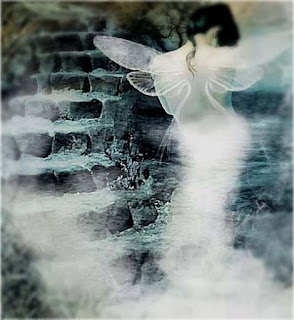
In the Scottish folktale Redemption from Fairie Land, a young wife is stolen away from her home during childbirth. The next morning, what appears to be a corpse is discovered. However, her husband learns that the faeries have her spirit, and the "corpse" is nothing but wood. He is given instructions for how to rescue her and his infant son. He must first gain forgiveness for his wife (for telling him the secret) and then the woman's brother must wrestle her away from the fairie spirits. In the end, the woman and her newborn son are returned home.
The clearest archetype present in the tale is resurrection. The woman, although married, conveys the maiden archetype, and the husband plays her hero (monomyth). All evil takes place during the night, and goodness/realization come about in the morning, therefore illustrating a light-dark archetype. Also, the wife's ghostly form is dressed in white. Finally, the faeries function as evil tricksters, replacing the woman's body with a wooden corpse.
This tale is specifically Scottish in that the tricksters are faeries -- Scottish mythology features characters including faeries, brownies, mermaids, etc. Also, the Christian heritage of Scotland comes up in that the Reverend is the one who recognizes the evil deeds of the faeries. Often, Scottish faeries are defeated through Christian means. I wonder if the book in his pocket is a Bible, which he refuses to throw in the moat. The setting of the story is also quite Scottish (moat, bushes and brambles) and has a distinctly Scottish "feel" to it.

In the Scottish folktale Redemption from Fairie Land, a young wife is stolen away from her home during childbirth. The next morning, what appears to be a corpse is discovered. However, her husband learns that the faeries have her spirit, and the "corpse" is nothing but wood. He is given instructions for how to rescue her and his infant son. He must first gain forgiveness for his wife (for telling him the secret) and then the woman's brother must wrestle her away from the fairie spirits. In the end, the woman and her newborn son are returned home.
The clearest archetype present in the tale is resurrection. The woman, although married, conveys the maiden archetype, and the husband plays her hero (monomyth). All evil takes place during the night, and goodness/realization come about in the morning, therefore illustrating a light-dark archetype. Also, the wife's ghostly form is dressed in white. Finally, the faeries function as evil tricksters, replacing the woman's body with a wooden corpse.
This tale is specifically Scottish in that the tricksters are faeries -- Scottish mythology features characters including faeries, brownies, mermaids, etc. Also, the Christian heritage of Scotland comes up in that the Reverend is the one who recognizes the evil deeds of the faeries. Often, Scottish faeries are defeated through Christian means. I wonder if the book in his pocket is a Bible, which he refuses to throw in the moat. The setting of the story is also quite Scottish (moat, bushes and brambles) and has a distinctly Scottish "feel" to it.
Archetypes: Good Dreams
Archetypes are story elements -- character types and symbolic images -- that recur across time and culture. Is their presence a clue about God???
Romans 1:20 says that "since the creation of the world God's invisible qualities—his eternal power and divine nature—have been clearly seen, being understood from what has been made, so that men are without excuse." We can experience the grandeur of nature and study the complexity of creation to see God's eternal power. And, perhaps, God has also written his divine nature into the heart of man.
C.S. Lewis (author of the Narnia books) believed that God imprinted humans with a divine subconscious message. In Mere Christianity, he said: "And what did God do? First of all He left us conscience, the sense of right and wrong: and all through history there have been people trying (some of them very hard) to obey it. None of them ever quite succeeded. Secondly, He sent the human race what I call good dreams: I mean those queer stories scattered all through the heathen religions about a god who dies and comes to life again and, by his death, has somehow given new life to men."
So, in summary of Lewis, we could say that God revealed his divine nature into the subconscious mind of man by (1) giving us a natural sense of right and wrong and (2) imprinting us with certain expectations, desires and hopes. We could call these "good dreams" archetypes. Archetypes include the universal expectation of a hero, the desire for light in the darkness, and the hope for triumph over death. There are many archetypes.
But let us not stop there. Let us also joyfully acknowledge that he revealed himself most specifically through his son, Jesus, who fulfilled the archetypes. Where humanity had previously been dreaming, Jesus was the dream "come true."
ARCHETYPES YOU SHOULD RECOGNIZE: monomyth, hero cycle, journey/quest, maiden, wise old man, sidekick, crone, trickster, shadow, storyteller, light/dark, colors, numbers, forest, garden, desert, snakes, birds, water, fire, resurrection
Note about character archetypes: Many character archetypes were originally expressed out of a paternalistic framework (i.e. men are heroes and mentors, women are victims and witches). Modern expressions of archetype often swap gender. This is OK!
Romans 1:20 says that "since the creation of the world God's invisible qualities—his eternal power and divine nature—have been clearly seen, being understood from what has been made, so that men are without excuse." We can experience the grandeur of nature and study the complexity of creation to see God's eternal power. And, perhaps, God has also written his divine nature into the heart of man.
C.S. Lewis (author of the Narnia books) believed that God imprinted humans with a divine subconscious message. In Mere Christianity, he said: "And what did God do? First of all He left us conscience, the sense of right and wrong: and all through history there have been people trying (some of them very hard) to obey it. None of them ever quite succeeded. Secondly, He sent the human race what I call good dreams: I mean those queer stories scattered all through the heathen religions about a god who dies and comes to life again and, by his death, has somehow given new life to men."
So, in summary of Lewis, we could say that God revealed his divine nature into the subconscious mind of man by (1) giving us a natural sense of right and wrong and (2) imprinting us with certain expectations, desires and hopes. We could call these "good dreams" archetypes. Archetypes include the universal expectation of a hero, the desire for light in the darkness, and the hope for triumph over death. There are many archetypes.
But let us not stop there. Let us also joyfully acknowledge that he revealed himself most specifically through his son, Jesus, who fulfilled the archetypes. Where humanity had previously been dreaming, Jesus was the dream "come true."
ARCHETYPES YOU SHOULD RECOGNIZE: monomyth, hero cycle, journey/quest, maiden, wise old man, sidekick, crone, trickster, shadow, storyteller, light/dark, colors, numbers, forest, garden, desert, snakes, birds, water, fire, resurrection
Note about character archetypes: Many character archetypes were originally expressed out of a paternalistic framework (i.e. men are heroes and mentors, women are victims and witches). Modern expressions of archetype often swap gender. This is OK!
Wednesday, September 17, 2008
Wordy Wednesdays Fall '08
VOCABULARY SCHEDULE
KEY: L=Lesson, ex=exercises, rev=review exercises
You are not required to do exercises asking for original sentence or paragraph composition
9/17 - L 1 ex
9/24 - L 2 ex, L 1-2 rev
10/1 - L 1-2 test
10/8 - L 3 ex and know roots through L 4
10/15 - L 4 ex, L 3-4 rev
10/22 - L 3-4 test
10/29 - L 5 ex and know roots through L 6
11/5 - L 6 ex, L 5-6 rev
11/12 - L 5-6 test
11/19 - L 7 ex and know roots through L 8
11/26 - L 8 ex, L 7-8 rev
12/3 - L 7-8 test
1/7 - cumulative test on L 1-8
(no more vocab till 2nd semester)
KEY: L=Lesson, ex=exercises, rev=review exercises
You are not required to do exercises asking for original sentence or paragraph composition
9/17 - L 1 ex
9/24 - L 2 ex, L 1-2 rev
10/1 - L 1-2 test
10/8 - L 3 ex and know roots through L 4
10/15 - L 4 ex, L 3-4 rev
10/22 - L 3-4 test
10/29 - L 5 ex and know roots through L 6
11/5 - L 6 ex, L 5-6 rev
11/12 - L 5-6 test
11/19 - L 7 ex and know roots through L 8
11/26 - L 8 ex, L 7-8 rev
12/3 - L 7-8 test
1/7 - cumulative test on L 1-8
(no more vocab till 2nd semester)
Subscribe to:
Posts (Atom)